
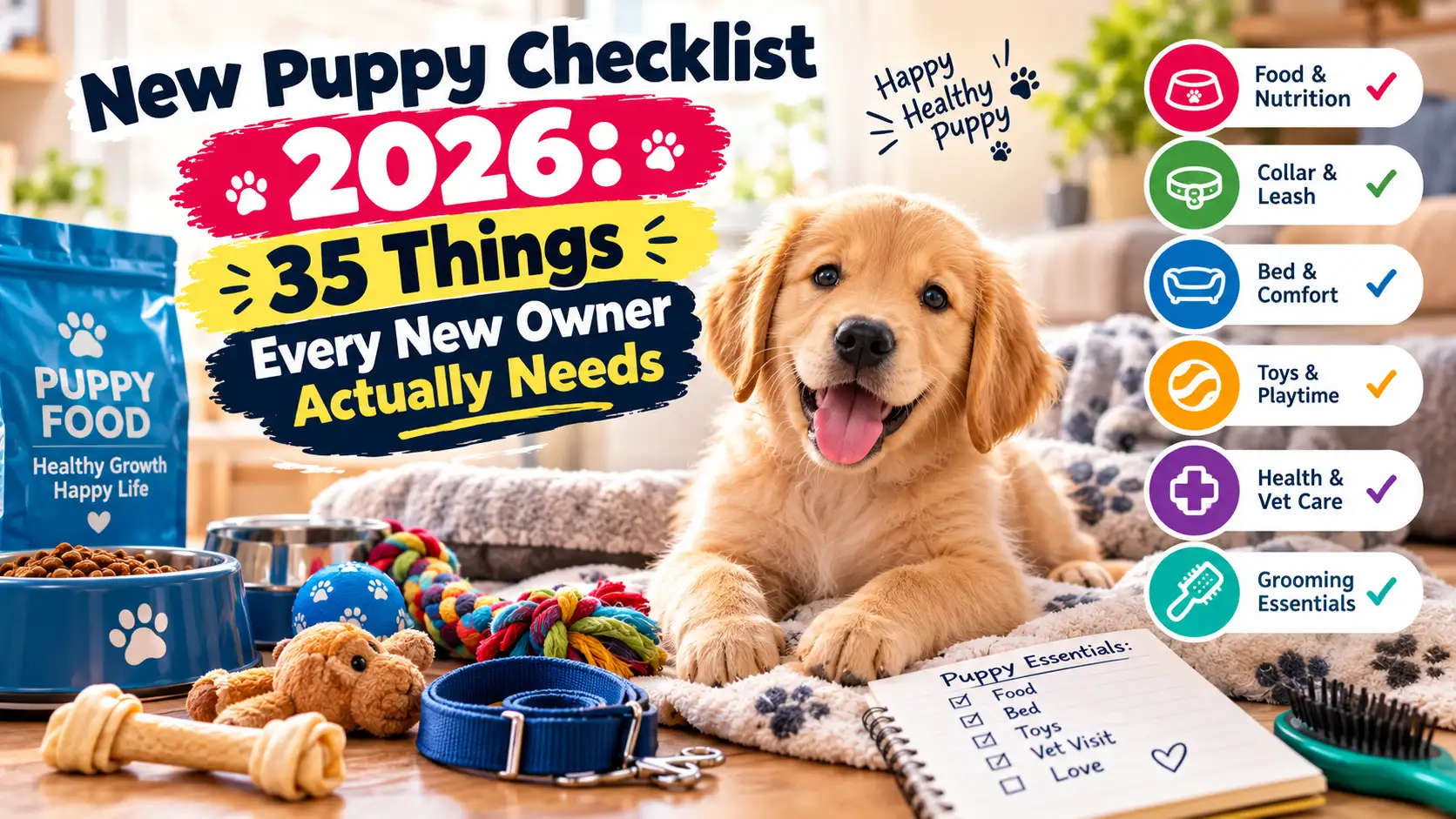
Bringing home a puppy in 2026? Here’s the real checklist — the obvious stuff, the stuff nobody mentions, and the stuff you’ll regret skipping.
New Puppy Checklist 2026: 35 Things Every New Owner Actually Needs
Somewhere around 2am on night three, you’ll be sitting on the kitchen floor in pajamas, holding a whining eight-week-old puppy who refuses to settle, wondering why nobody told you crate training involves this much sitting on tile at 2am. That’s the part the pet store checklist skips. It tells you to buy a bowl and a leash. It doesn’t tell you that you’ll want a baby monitor pointed at the crate, or that the “calming” spray you bought does basically nothing, or that the puppy will absolutely chew through one good pair of shoes before this is over.
This list is built for that gap — the stuff that shows up on day one, week two, and month three, not just the stuff that looks good on a registry.
The stuff you need before the puppy even walks in the door
1. A crate sized for the adult dog, with a divider — buying a bigger crate now and blocking off space saves money later, and most puppies actually settle better in a snug space anyway.
2. Puppy-safe baby gates, not the flimsy pressure-mounted kind — a determined 12-week-old can knock those over, and once one falls, they stop respecting any gate.
3. An exercise pen for supervised-but-hands-off time, especially useful during the stretch where the puppy’s bladder control lags behind their energy level.
4. Food and water bowls — stainless steel over plastic, since plastic holds bacteria and some puppies get chin acne from it.
5. A slow-feeder bowl, because most puppies inhale food fast enough to throw it back up within minutes.
6. Puppy food appropriate for breed size — large-breed puppies need controlled calcium levels to avoid growth plate issues, which is a detail a lot of first-time owners never hear until a vet mentions it at the first appointment.
7. Training treats, cut small — pea-sized, not the treat-sized treats on the bag, because a puppy doing forty reps of “sit” doesn’t need forty full treats.
8. A leash and flat collar, plus a separate ID tag, because collars slip off more often than people expect in the first few months of a still-growing neck.
9. A harness, for pulling control and because a lot of trainers now recommend front-clip harnesses over collar-only walking for young dogs still learning leash manners.
10. Poop bags, obviously, but the unscented kind — the scented ones sometimes bother dogs with sensitive noses on walks.
The stuff nobody puts on the registry but you’ll want by week two
11. An enzymatic cleaner, not regular carpet cleaner — regular cleaners don’t fully break down the proteins in accidents, which is part of why dogs keep going back to the same spot.
12. A baby gate for the bedroom door, separate from the stairs one, because closing a puppy fully out of the bedroom on night one is a different emotional experience than most people expect.
13. Bitter apple spray, for the inevitable chewing phase — works on maybe 60% of dogs, worth trying anyway since it’s cheap.
14. A few actually durable chew toys — Kongs, Nylabones — because the soft plush toy from the gift bag will not survive past day four with most puppies.
15. A snuffle mat or slow-treat puzzle, mental stimulation matters as much as physical exercise for tiring out a young dog, and a bored puppy is a destructive puppy.
16. Puppy pads, even if the plan is fully outdoor training — useful for overnight and for apartment dwellers on higher floors during a snowstorm.
17. A well-fitted puppy coat or sweater, if the breed is small or short-haired and it’s winter — this one gets skipped a lot and regretted in January.
18. Paw wax or booties, for salted sidewalks, hot pavement, or rough terrain depending on season and location.
19. A brush appropriate for the coat type — a slicker brush for double coats, a bristle brush for short coats, because using the wrong tool either does nothing or actually damages the coat.
20. Dog-safe nail clippers or a grinder, plus styptic powder for the inevitable nail cut too short.
The stuff for actually training a puppy, not just containing one
21. A clicker, if going the clicker-training route — cheap, small, and genuinely effective for marking behavior precisely.
22. A long training leash, 15-30 feet, for practicing recall in open spaces before trusting off-leash reliability.
23. A puppy training class registration — in-person, if possible, both for the training itself and the socialization exposure to other dogs and people in a controlled setting.
24. A “settle” mat or bed, specifically for teaching the puppy to relax in one spot during meals or visitors, separate from the sleeping crate.
25. A muzzle, even if it feels unnecessary — useful for vet visits, grooming, or any situation involving pain or fear, and far easier to introduce calmly now than to force on later in an emergency.
The health and safety stuff that’s easy to forget
26. A pet first-aid kit, with gauze, vet wrap, and contact info for the nearest emergency vet already saved somewhere accessible.
27. Flea, tick, and heartworm prevention, started on the vet’s actual schedule, not “whenever I remember” — this one has real consequences if skipped.
28. A carrier or car harness, for safe car travel — an unrestrained puppy in a moving car is a genuinely dangerous setup for everyone in the vehicle.
29. Puppy-proofing supplies — outlet covers, cord protectors, cabinet locks — because a curious mouth finds things adults forget are even accessible.
30. Microchipping, done at the first vet visit if not already done by the breeder or shelter, plus registering the chip with current contact information.
The stuff that’s about the humans, not the dog
31. A shared calendar or app for tracking feeding, potty breaks, and medication — especially in a multi-person household, where “did you already feed her?” becomes a daily argument without one.
32. A pet insurance policy, purchased before any pre-existing conditions show up, since coverage gets harder and more expensive to get after a diagnosis exists.
33. A dog walker or daycare contact saved in the phone, even if not needed immediately — finding one during an actual emergency is worse than researching one calmly in week one.
34. Realistic expectations about sleep, which isn’t a product but belongs on this list anyway — most puppies need one or two nighttime bathroom breaks for the first few weeks, and planning for interrupted sleep beats being blindsided by it.
35. Patience for the regression around month four to six, when adolescence hits and a previously “trained” puppy suddenly forgets basic manners — a normal developmental stage, not a sign that training failed.
A few things worth saying plainly
A lot of puppy checklists read like shopping lists because that’s easy to write and easy to monetize. The actual hard part of the first few months is less about gear and more about consistency — the same household rules enforced by everyone, the same schedule kept even on tired days, the same response to jumping or nipping every single time instead of “just this once.”
Veterinary behaviorists, including researchers affiliated with the ASPCA, have pointed out that the socialization window before 16 weeks is one of the more time-sensitive parts of puppy development — exposure to different people, sounds, surfaces, and situations during that stretch tends to shape adult temperament more than almost anything that happens after it. That’s worth prioritizing over a lot of the gear on this list, honestly.
FAQ
What’s the most important thing on a new puppy checklist?
The crate and the food, in terms of day-one necessities — but the training class and early socialization matter more for the long run than any single product.
Do I really need a harness and a collar?
Yes — the collar holds ID tags and should stay on at all times, while the harness handles the physical pulling force during walks, which is easier on a young dog’s still-developing neck and trachea.
When should puppy-proofing happen?
Before the puppy arrives, ideally — outlets, cords, and reachable cabinets get checked while there’s no puppy underfoot chewing on the cord being unplugged.
Is pet insurance worth it for a puppy?
Often yes, specifically because buying it early means no pre-existing condition exclusions yet — premiums are also generally lower for younger, healthier dogs.